
SUSTAINABILITY
Our Commitment

Sustainability Targets

2025 Data Highlights
CONTAINERS DIVISION
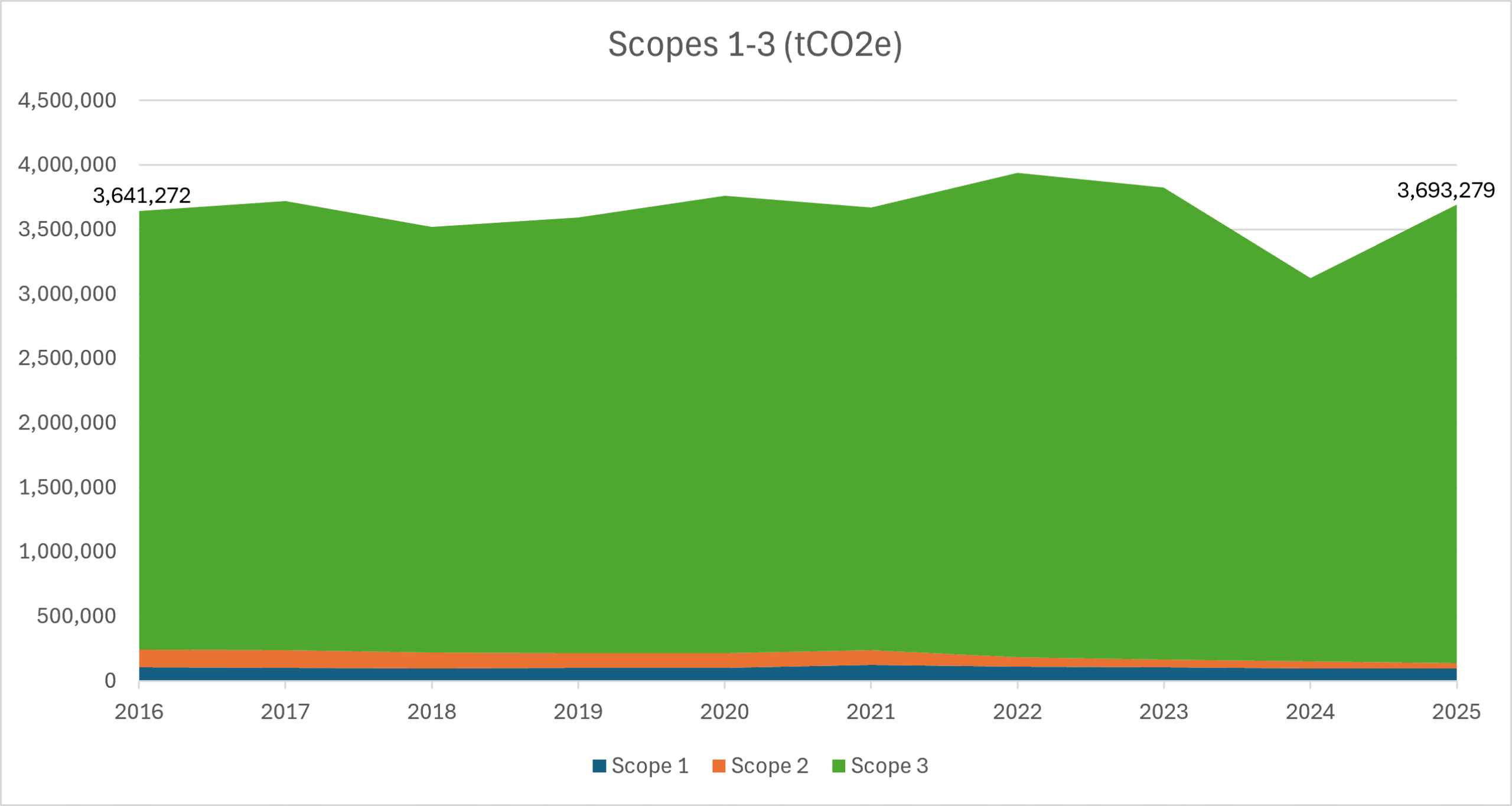
GHG EMISSIONS (Tonne CO2e)
As of 2025, Silgan has reduced our market-based Scopes 1&2 emissions by 46.6% versus 2016. This reduction was driven by three trends: decarbonization of the US electricity grid, energy efficiency improvements across our operations, and our renewable energy procurement.
(Swipe to view data)
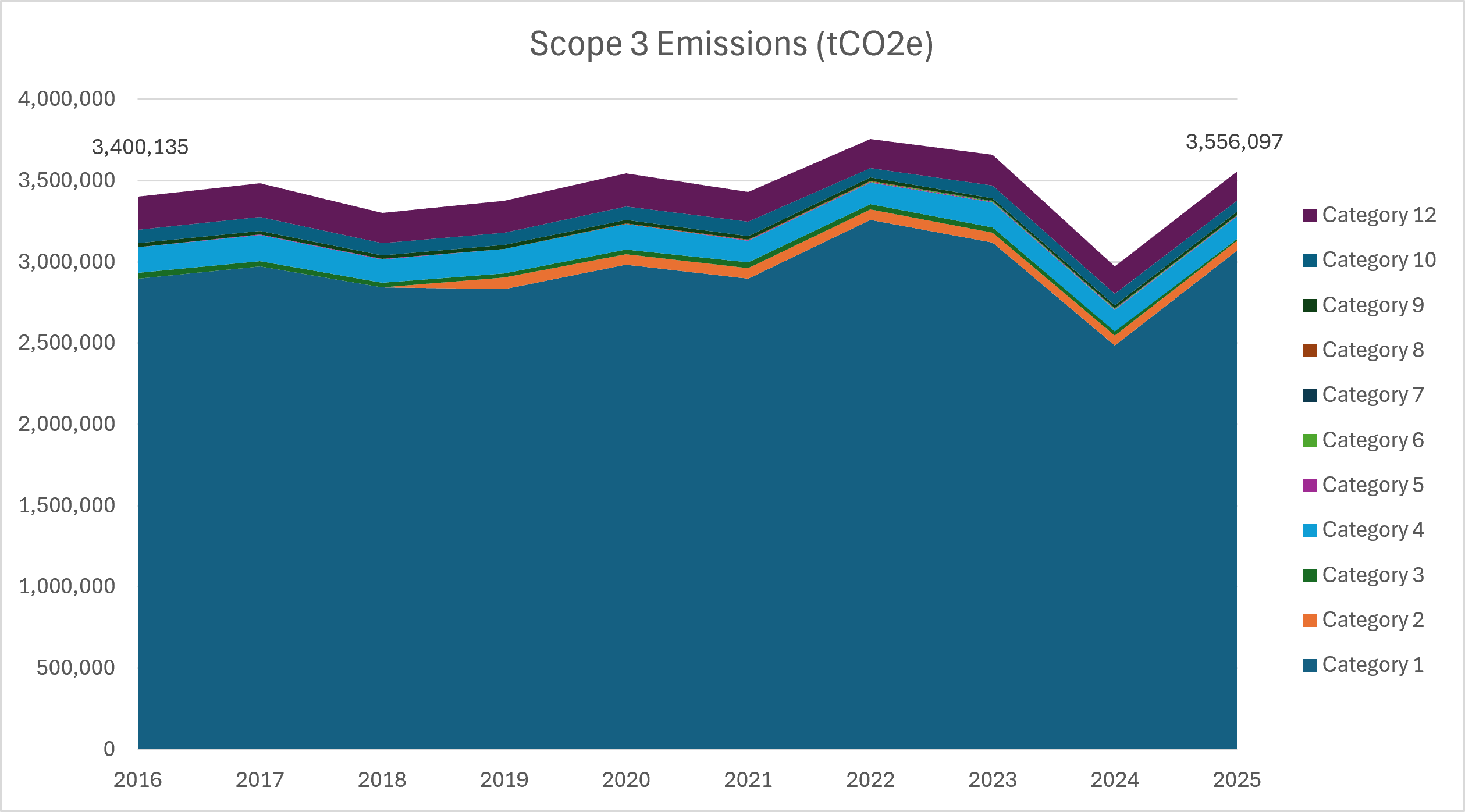
SCOPE 3 EMISSIONS
Since 2016, Silgan’s Scope 3 emissions have increased 4.6%. This increase was driven by a reduction in recycled content in our supply chain due to tariffs announced in March 2025. Silgan is working to address this short-term impact and ensure our supply meets our long-term decarbonization objectives.
(Swipe to view data)
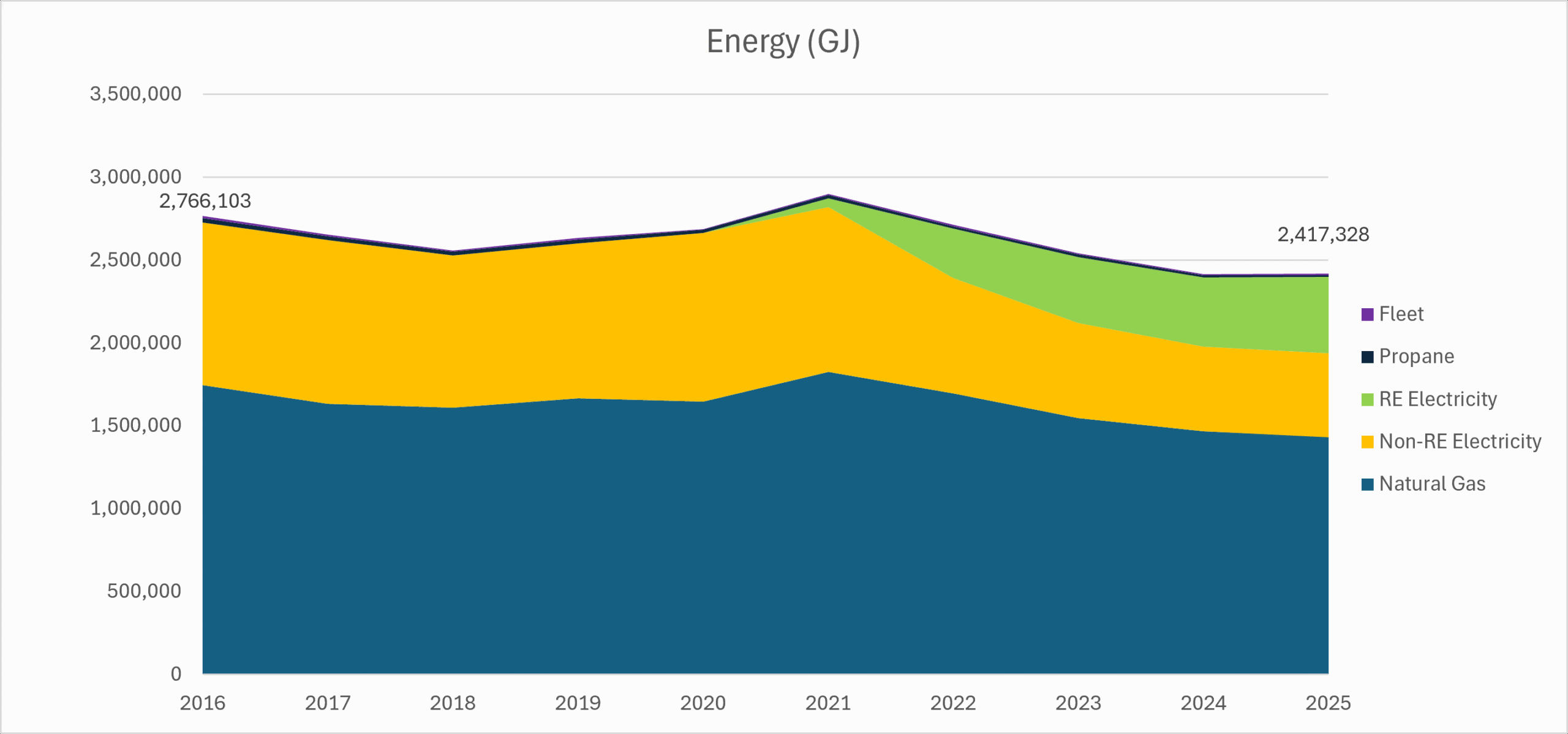
ENERGY (GJ)
Silgan has reduced our total energy consumption by 12.6% relative to our 2016 baseline. This reduction was driven by our largest energy sources, natural gas and electricity, which decreased 17.9% and 1.7%, respectively. These trends reflect efficiency improvements and changes to our production logistics, among other actions.
Our Ford County, IL, wind farm (financed through our virtual power purchase agreement) performed well last year, and two of our facilities received renewable energy from their utility. Consequently, Silgan retired 97,847 RECs, bringing our total RE to 127,858 MWh in 2025. This volume met customer expectations and maintained progress towards our targets on renewable energy and GHG reduction.
(Swipe to view data)
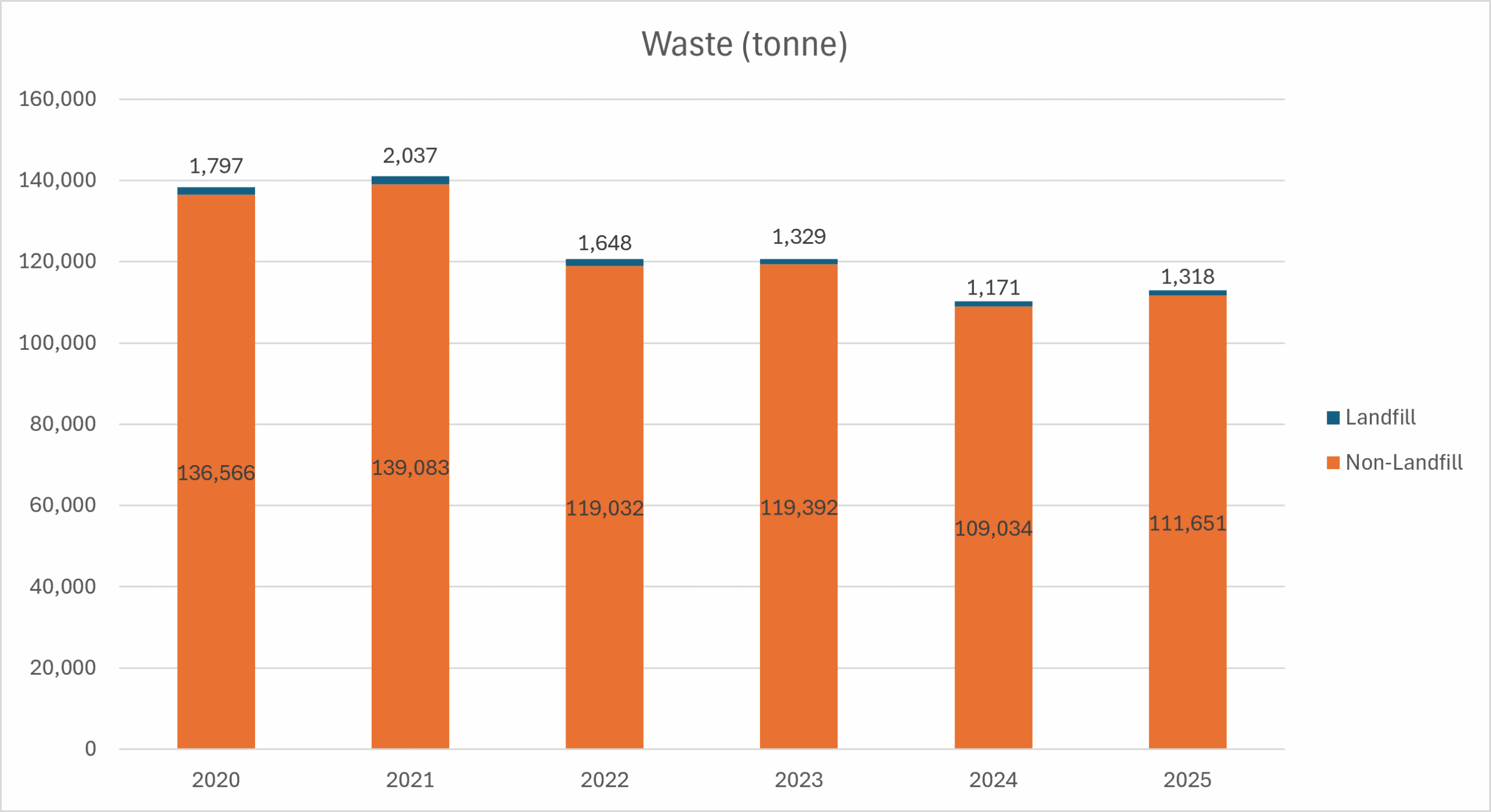
WASTE (tonne)
Silgan generated over 100,000 tonnes of waste in 2025, with approximately 1% sent to landfill. The largest relative reduction stems from our landfill waste stream, which decreased by 26.7% since 2016. This trend reflects Silgan’s efforts to increase recycling across our operations.
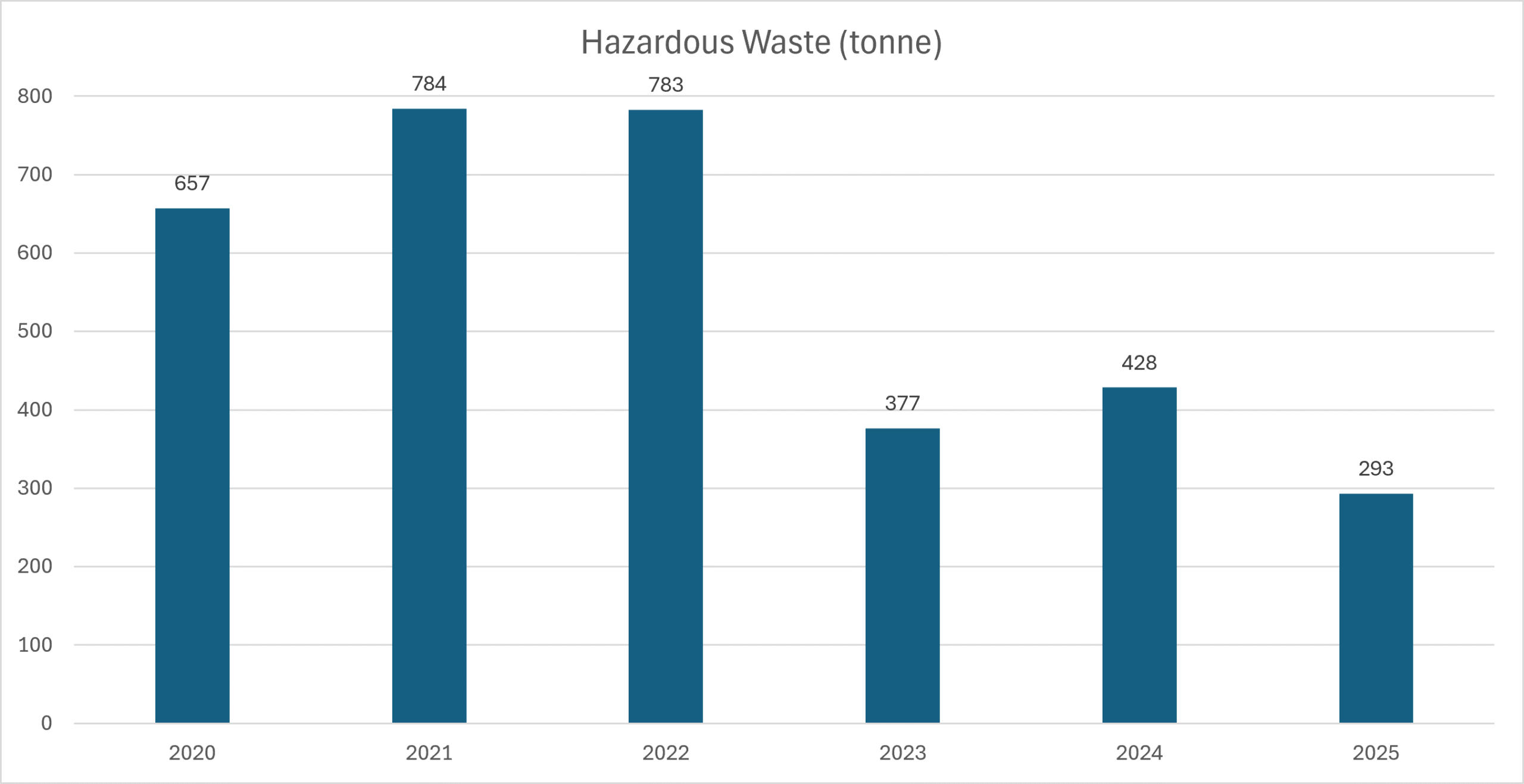
Despite its small relative footprint, tracking our hazardous waste remains critical to comply with federal regulations on handling wastes that pose a risk to human health and the environment. In addition to optimizing operational efficiencies and production logistics, Silgan seeks out emerging technologies and materials which reduce our dependence on hazardous materials. These actions have led to a 55.4% decrease in hazardous waste generation since 2020.
(Swipe to view data)
WATER WITHDRAWAL (m3)
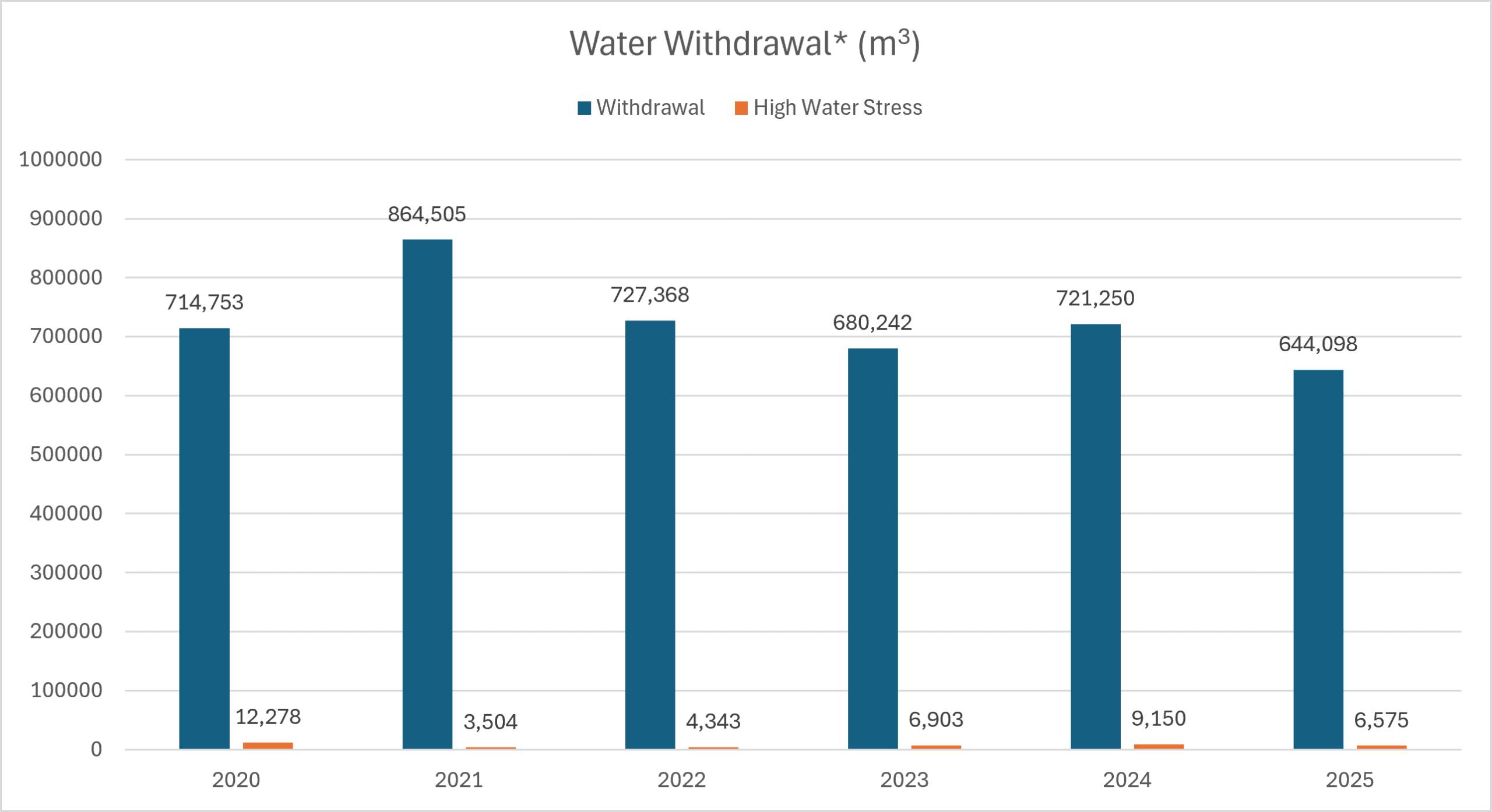
Silgan’s overall water withdrawal decreased 9.9% between 2016 and 2025. Two of our facilities are located in water-stressed regions; water withdrawal in these facilities decreased 46.5% over the same period. Silgan completed our exercise to establish a water stewardship program in 2025. Site-specific plans were developed for our priority locations and a general plan for all other locations.
(Swipe to view data)
Note: we have removed water data for two of our facilities. Concern over data integrity has led Silgan to reexamine their data sources. Data for these facilities will be added back in future reporting once we confirm their accuracy.
Strategic Oversight
Sustainability is not just important to us, it is critical for our food manufacturing customers and end consumers. That is why sustainability is one of our five core imperatives across the entire organization.
To ensure we are working on the right projects and objectives, we employ both a top-down and bottom-up approach to ensure the initiatives we undertake have our full commitment and are resourced to achieve their highest potential.
From executive leadership down to each individual location, the entire Silgan Containers community is committed to delivering on our sustainability targets and goals.
Steering Committee
The Steering Committee is responsible for overseeing and executing our program. It reviews data reporting, programs and initiatives, and overall strategy.
Corporate Sustainability Team
The corporate sustainability team manages the day-to-day operations of the program: data collection, program implementation, customer reports, stakeholder engagement, etc.
Supporting Departments
Several departments support the Sustainability Teams and Steering Committee on our sustainability program. These include:
- Engineering – Project management related to energy and resource consumption
- Human Resources – Employee engagement and wellness
- Marketing – Stakeholder communications
- Operations – Production and facility management
- Regulatory – Compliance with regulations and voluntary codes
- Safety – Safety risk identification and mitigation
- Sales – Customer engagement
Sustainability Teams
The Sustainability Teams are run by employees at our manufacturing facilities. Each team is responsible for managing its facility’s actions to improve environmental impacts and community outreach.
Sustainability Programs

DOE Better Plants® Program
- Voluntary program to identify energy reduction projects.
- All locations audited and remaining projects reviewed for implementation.

Renewable Energy (VPPA)
- Financed 135 MW-capacity wind farm through virtual power purchase agreement (VPPA)
- Allows Silgan to achieve RE and GHG targets.
- Investigating Silgan global VPPA and on-site RE.

Waste Minimization
- Steps to achieve long-term circularity in our operations.
- Training and signage provided to locations to implement recycling initiatives.

Water Stewardship
- Internal program to develop water stewardship plans focused on best management practices.
- Completed water stewardship plans in 2025.
-

Safety
- Top priority in our operations remains the safety of our employees.
- Industry-leading OSHA recordable incident rate of 0.92 (incidents/100 employees).
- Approx. 1/3 of our facilities reported zero recordable work-related incidents in 2025.

Employee Engagement
- Regular training and communications on sustainability to employees.
- Shared meals and employee gatherings to celebrate retirements, safety performances, etc.

Community Outreach
- Participation in community events (fundraising, career fairs, etc.).
- Educating consumers on the sustainability benefits of metal food cans.
- Companywide National Canned Food Month drive donated over 180,000 lbs. of canned food to local food pantries.
-
-
Embracing Circularity
The Benefits of Aluminum and Steel
Aluminum and steel are two of the most sustainable materials in the world, valued for their durability (unique strength characteristics), shelf stability for food products (nutrition preservation without refrigeration energy requirement), and 100% and infinite recyclability (ideal for circularity). Each substrate offers advantages and opportunities depending on the product fill and market.
Aluminum
Steel

Food Waste
Metal food packaging is recognized for its shelf stability
- Long-term preservation reduces food waste
- Food waste is a top contributor to global GHG emissions 1

Energy Savings
Metal food packaging does not require energy-intensive preservation methods
- No refrigeration or freezing means less GHG emissions

Recyclability
Aluminum and steel are two of the most recycled materials in the US and globally 2 3 4
- US food cans – Steel: 44% 5 | Aluminum: 45.2% 6
- High value product in recycling stream
- Drives down carbon intensity

Recycled
Content
Aluminum production can consume recycled aluminum
- Different alloys tolerate different recycled content amounts
- Post-industrial and post-consumer both acceptable
Steel production can consume recycled steel
- Metal chemistry and quality requirements for food packaging currently dictate recycled content
- Post-industrial and post-consumer both acceptable

Carbon
Intensity
Aluminum production is carbon intensive due to current technologies
- Reduction of alumina with carbon anodes to extract oxygen
- High recycled content mitigates GHG concerns
Steel production is carbon intensive due to current technologies
- Reduction of pig iron with oxygen to extract carbon
- Steel suppliers are investing in less carbon–intensive technologies

Circularity
Aluminum and steel can be recycled infinitely, positioning them as crucial materials in the circular economy
- Most aluminum and steel ever produced is still in use today 7 8

Bottom Line
Aluminum and steel substrates have a distinct sustainability advantage due to their unique chemical properties, longevity in the market, and inherent circularity. Technology and process improvements over the next few decades by aluminum and steel mills will address the substrates’ carbon intensities, positioning them as two pivotal materials in the future circular economy.
- Zhu, Jingya, et al. Cradle-to-grave emissions from food loss and waste represent half of total greenhouse gas emissions from food systems. Nature Food, 2023.
- USEPA, Facts and Figures about Materials, Waste, and Recycling.
- International Aluminum, Aluminum Recycling Factsheet.
- Bureau of International Recycling, World Steel Recycling in Figures, 2017-2021.
- Can Manufacturers Institute, Sustainability Advantages of Cans.
- The Aluminum Can Association, The Aluminum Can Advantage.
- The Aluminum Association, Recycling
- SUSTAIN Steel, Scrap: Our Greatest Resources?
Committed to Efficiencies Through the Supply Chain
Easy handling, fast filling with low spoilage makes cans a natural choice for streamlined, cost-efficient production and reliable distribution.

less energy
Food cans require up to 70% less energy throughout the supply chain compared to refrigerated and frozen foods. (Metal Packaging Europe)

Less secondary packaging
Cans require significantly less secondary packaging than alternative packages because of their inherent strength. (Metal Packaging Europe)

Stock up
Canned foods’ long shelf-life and preserved taste let consumers stock up and stay supplied. (CannedGood.org)

Storage benefits
In the retail environment, steel packaging can be easily stored, handled and stacked. It is virtually impossible to spill or break. (APEAL, Steel for Packaging Naturally)

Reduced emissions
New steel produced with recycled cans reduces greenhouse gas emissions by 75%. (Can Central)

Lower transportation costs
Silgan has over two dozen manufacturing facilities throughout the United States, which allows for significant savings in transportation costs. (Contact Silgan)
Recyclability
Steel & Aluminum: Infinitely Recyclable
While our packages protect and preserve our customers’ products, thanks to their 100% recyclability they are also helping to minimize our impact on the environment.
80-90%
of all steel ever produced is still in use today (Arcelor Mittal, 2024).
Steel cans have a
58%
recycling rate, the highest of any food
package (Canned Good, 2024).
Nearly
75%
of all aluminum ever produced is still in use today (The Aluminum Association, 2024).
How Recycling
Steel Saves Resources

Saves natural resources
Every ton of recycled steel saves 3,600 pounds of CO2, 2,500 pounds of iron ore, 1, 400 pounds of coal and 120 pounds of limestone (Can Manufacturers Institute).

Saves energy
Recycled aluminum requires 95% less energy than producing new aluminum and generates only 5% of the greenhouse gas emissions. 75% of all aluminum produced in history is still in use (The World Counts).

Reduces waste
Making new steel products from recycled steel reduces water use by 40%, water pollution by 76%, air pollution by 86% and mining waste by 97% (EURIC AISBL).
Educational Resources
Silgan is dedicated to raising awareness of recycling and sustainability within the industry. We connect people to educational, environmental and recycling resources, showing them how they can join us in the fight to spread environmental awareness and help save our planet.